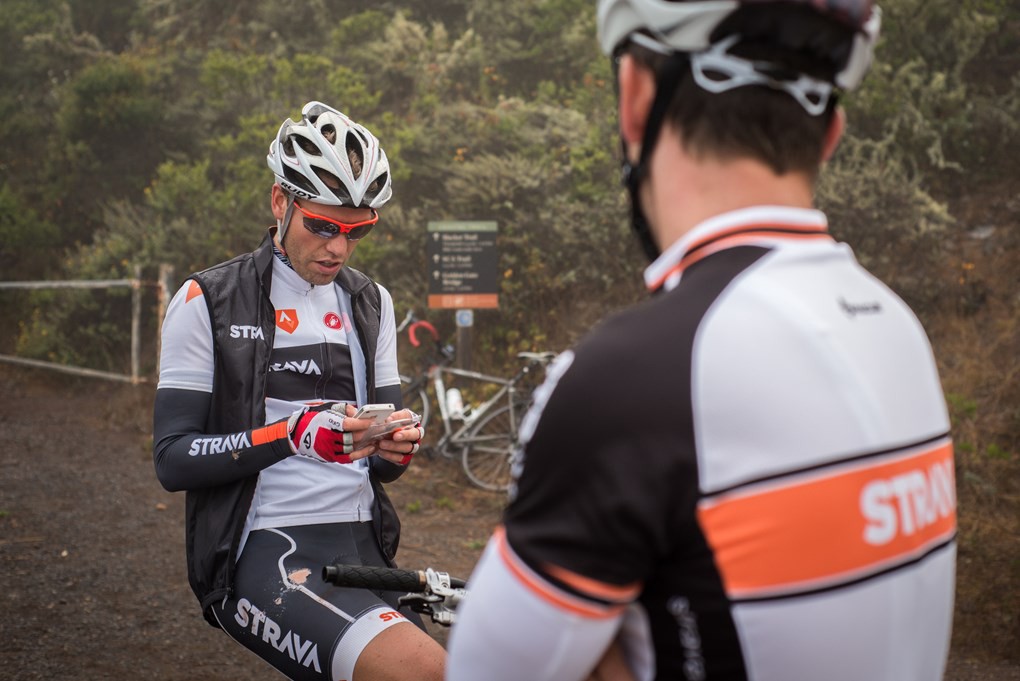
If you ask me, Strava is the most elegant digital innovation since Gowalla and Dropbox.
More objectively, Strava is probably the most popular, successful and groundbreaking digital service in fitness to have seen the light of day since the turn of the millennium. Strava has changed the etiquette of cycling. Validation junkies have been given something to live for. Countless lives have been improved. But the hunt for new KOMs has also led to sudden violent death.
The story of Strava
It was Michael Horvath and Mark Gainey, rowing buddies at Harvard in the late eighties, who came up with the basic concept for Strava as early as the mid-nineties.
“To be motivated as a rower, it’s incredibly important to have teammates you train with day in, day out, who push and drive you to reach your absolute peak of what you can achieve. That’s hard to recreate when you’ve stopped doing the sport,” Horvath has said.
Horvath and Gainey bounced around ideas about a “digital locker room” where you could cheer each other on, upload your training log and compare yourself with others. Even if you trained alone, you would not feel lonely. However, GPS technology was far too expensive and rudimentary in the mid-90s. The two friends put the idea on ice and instead founded Kana Software, a customer communication system that went public three years later, whereupon Horvath and Gainey cashed out and moved to New Hampshire and Silicon Valley respectively.
In May 2000, the Clinton administration made GPS more accessible to private individuals and entrepreneurs by refining the available precision from 50 to 3 metres. At the same time, GPS gadgets became cheaper and cheaper and started finding a new market among cyclists and outdoor enthusiasts.
In addition, social media broke through on a broad front, and it became both easy and natural to share personal information digitally (like pictures of kittens). Horvath and Gainey picked up their old idea again.
Two things set Strava apart from similar services right from the start. They targeted cyclists instead of runners — “cyclists were already using GPS gadgets” — and they added a clear social layer that has become the core of the product.
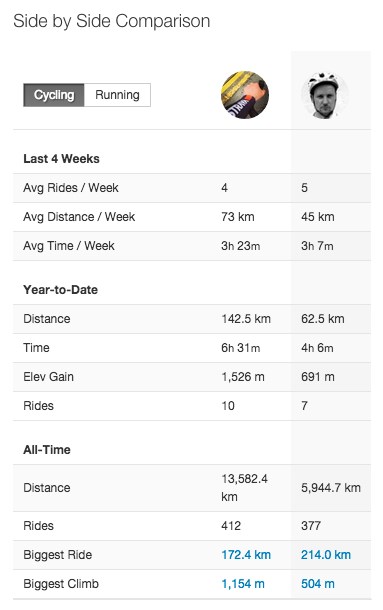
Horvath: “It can be people you know, or friends you’ve found through Strava. If someone follows you, they’ll see the information you’ve posted. If, for example, you look at my profile, you’ll see yourself in relation to me. How many times on average you’ve ridden in the last four weeks, the total distance I’ve ridden, and the number of riding hours this year. It gives you a chance to see whether a person is very active, about as active, or less active than you are.”
A social layer on training logs like Garmin Connect and Map My Ride may not feel all that revolutionary. It wasn’t, either. What made Strava take off was that they nailed the design from the start and that they introduced segments.
Segments
Strava saves your times on certain parts of popular routes. These are called segments. All users can add segments, but those with the most cyclists always have the highest prestige. Segments place you on a leaderboard relative to everyone else who has ridden the same stretch. It can be a climb, a sprint or a descent.
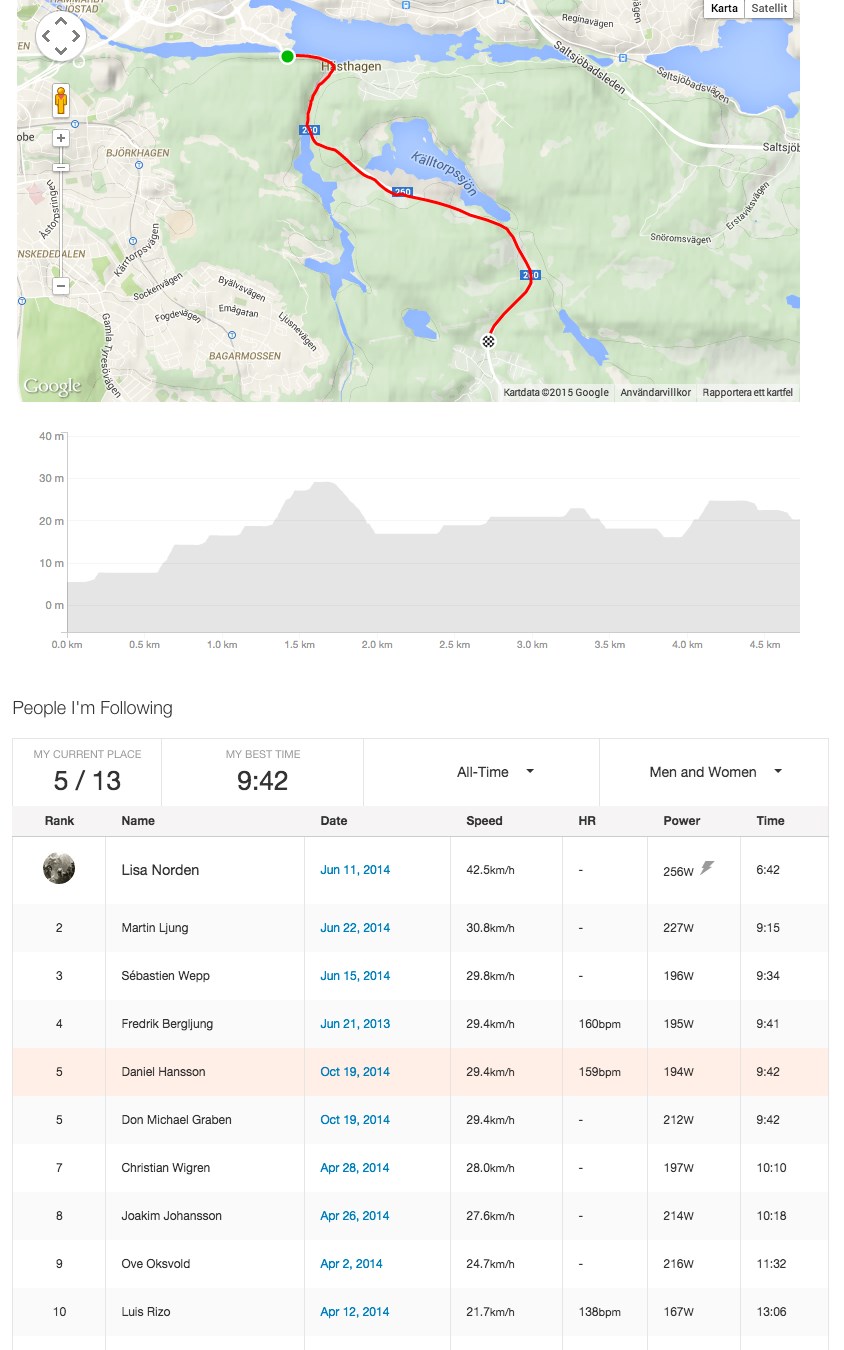
Seeing your relative time creates motivation: Can I improve relative to my own time? Be the best in my age or weight class? Or the best of all and become a KOM/QOM (KOM stands for King Of the Mountain, QOM stands for Queen Of the Mountain)? Training can be lonely. You may need something to strive for.
Side note: the word “Strava” comes from the Swedish verb sträva (to strive). Horvath spent his first six years in Sweden and, according to his LinkedIn profile, speaks Swedish.
Segments were an instant success.
How does it work?
Strava works roughly like most big training portals such as Garmin Connect and Suunto’s Movescount. The big difference is that you can upload data from a wide range of devices. Bike computers and GPS gadgets from Garmin (and some other manufacturers) sync automatically via USB or Bluetooth. The web service CopyMySports is even smoother, as it syncs automatically from Garmin Connect to Strava. You don’t even need to plug in the gadget via USB if you have already uploaded your training.
Even better is Tapiriik, which syncs your activities on RunKeeper, Strava, Garmin Connect, Endomondo, TrainerRoad, etc. It also saves your activities’ GPX files to your Dropbox. Manual syncing is free, and auto-syncing costs a modest 2 dollars a year.
Quite a few other apps and fitness gadgets have started supporting upload directly to Strava.
The app
If you don’t have a GPS watch, bike computer or other fitness gadget, you can download the Strava app, available for iOS and Android, and use it as a GPS tracker. You can also pair the app with Bluetooth gadgets for measuring cadence and heart rate. The app supports ANT+, but your phone may need an adapter if it doesn’t have built-in ANT+ support.
The app itself consists of two parts: tracking your training and analysing it afterwards. It’s easy to start tracking; the interface is really intuitive and elegant down to the smallest detail. You can tell that the people designing the experience are also part of the target audience.
When it comes to GPS tracking, a few things could be improved: the touch areas for the three tabs where you switch between tracking data, map and segments are too small, especially in wet weather. Another thing that is really odd that they haven’t fixed already is a live display of cadence if you have paired a cadence sensor with the app. In big numbers. The ability to configure certain fields yourself should also be in the backlog.
Apart from that, tracking works well and in line with what you can expect from tracking with a phone. Three or four times (out of 350) the tracking has ended by mistake. One more time, auto-pause got stuck and the tracking didn’t start again. A couple of times the Bluetooth-connected heart rate monitor stopped working. A big plus is that the battery life is really good; I’ve only needed to top up with extra batteries on really long routes after around 6–7 hours.
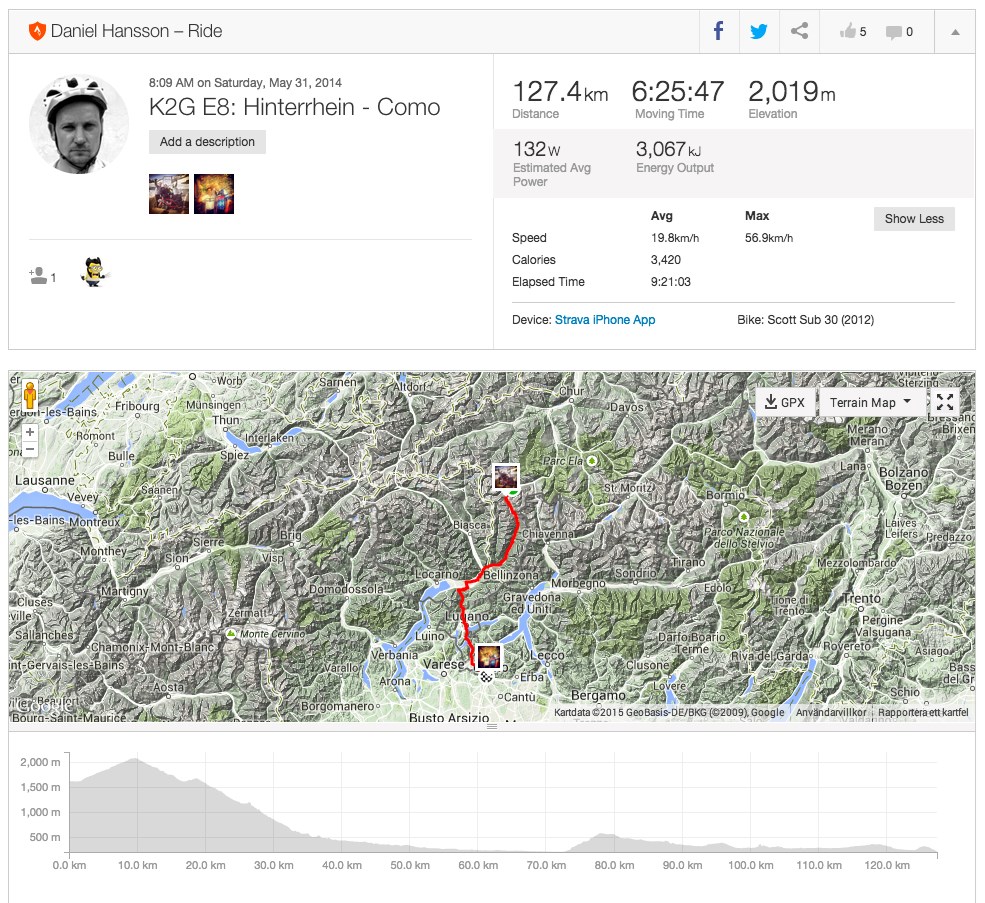
When you’ve finished the activity, it’s uploaded directly via the app, and here you can choose whether it should be private or available to everyone. When you upload, Strava goes through which segments you passed during the ride, and you get awards if you end up in the top 10 on the leaderboard (for the year) or set one of your three best times on the segment.
Strava’s community
The best part of Strava is the community and the number of users. The company has never revealed how many active users it has, only rather vague growth figures. According to Horvath, growth was 1,500% in 2009 and has since been between 800 and 1,000%. If you look at the highest user ID, it is now over 7.5 million.
So there’s a fairly good chance you already know a friend or colleague on Strava whom you can start following, and in that way compare your stats, get route tips and train to beat them.
And if your Facebook friends have grown tired of you spamming them with training rides, you’ll always find a virtual Strava buddy who is interested in how well or badly you perform on the segments.
Another community feature is challenges. Challenges can be of different kinds: how far can you ride in a month, climb 5,000 metres of elevation in two weeks, how fast can you ride 20 km, etc. You can see who has completed the challenges and who has done best, also in the form of leaderboards. For some challenges — like the popular Gran Fondo challenge that exists for most months — there’s an additional catch. You GET to buy an exclusive cycling jersey if you have completed the challenge. Not cheap. But nerdy. And of course perfect for reminding your training buddies that you did better than them.
You can also create clubs in Strava. So far the clubs have been rather neglected, and the feeling is that they’re not used to the extent of their potential. Here you find leaderboards on a weekly basis, something that should incidentally be customisable. You can also create events within the group, e.g. training rides. Here you should be able to create challenges within the group but also be able to see the group’s favourite segments. You should also be able to set goals for the whole group if, for example, you’re training together for a race or a longer cycling trip.
The premium version
Strava is a so-called freemium product where you get a great deal for free, but by paying SEK 40 a month you unlock additional functionality. Among other things, you can then set goals for segments and filter leaderboards by age, gender and weight. You also get access to instructional videos and training plans. Fun but not hugely useful.
Much more fun is real-time information for segments when you’re out riding. Your phone tells you when you have started a segment, your time halfway and the result when the segment ends. If you want to take this a step further, you can buy the third-party product Cliiimb, which also gives you visual feedback inside your cycling glasses on how you’re doing. A bargain at 199 dollars.
Another premium feature is your personal heatmap. Here you can generate maps of where you have ridden or run and how often in each place. Besides being fun for those of us who like maps, it’s also quite useful for discovering new routes and places you haven’t been before. If you don’t want to pay for Strava’s heatmap, there are hacks for this, though not particularly pretty ones.
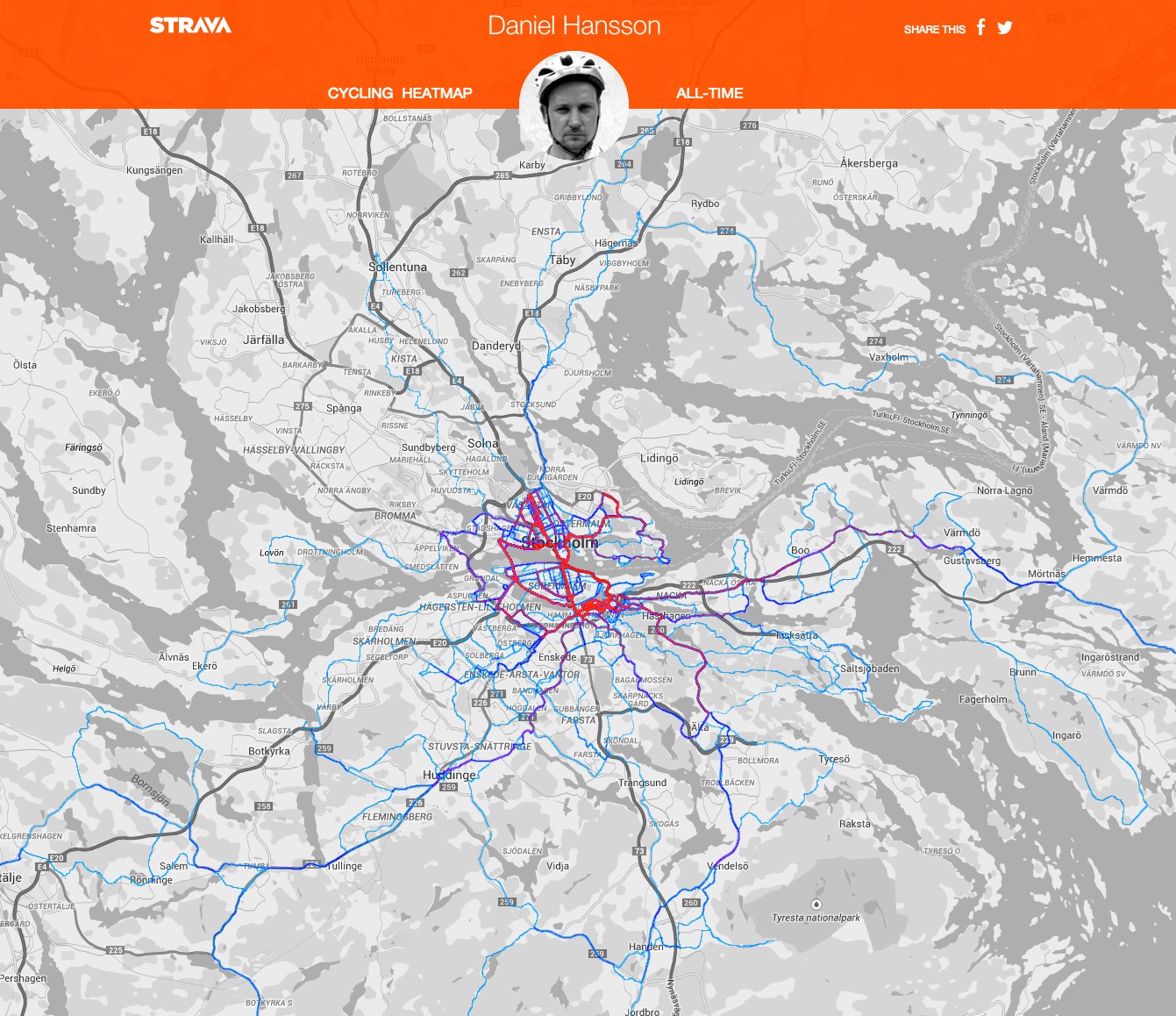 My cycling heatmap for 2014
Routes
Using Strava’s route planner you can create GPX files for running or cycling. You can then transfer these routes to your GPS device or use them directly in the app. The former is preferable, as Strava’s map functionality in the app is very limited and lacks both auto-panning and orienting the map to the route instead of north.
With settings like “popularity” and “minimise elevation” you can quite quickly “automatically” find good routes in new areas by entering start, waypoints and end points. But of course it’s more fun to experiment with different routes yourself.
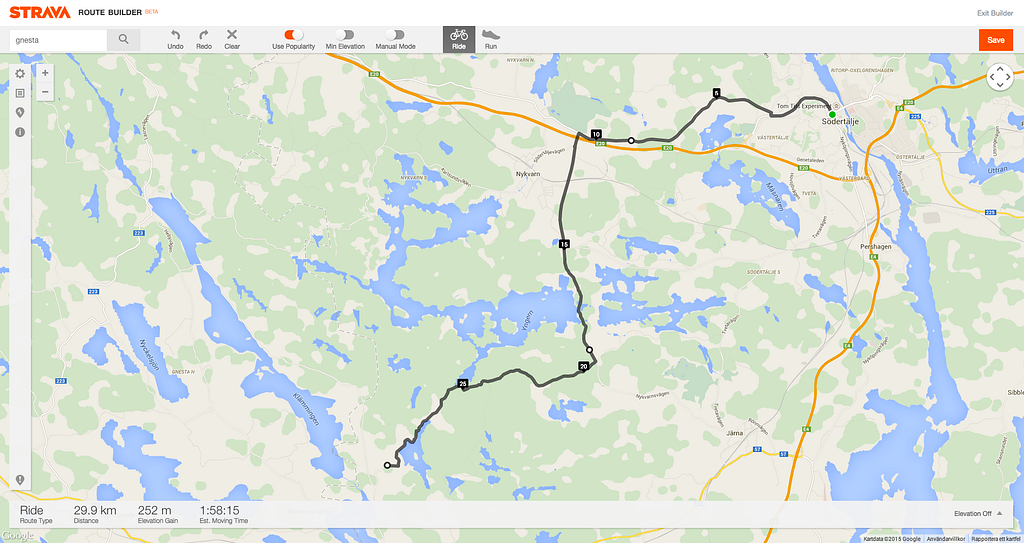
Example of how to plan routes for road cycling
When planning routes for road cycling, you simply enter where the route starts and where the next point in the route should be. Strava then works out which way you should take and adjusts to the roads and cycle paths on the map. You can then drag and change it if you’re not happy with the suggestion.
A really good feature when planning MTB routes is that by switching on the “global heatmap” you can get Strava to plot routes based on where others have ridden — even if it’s not on roads or cycle paths. Hugely convenient compared with googling for GPX files with dubious results.
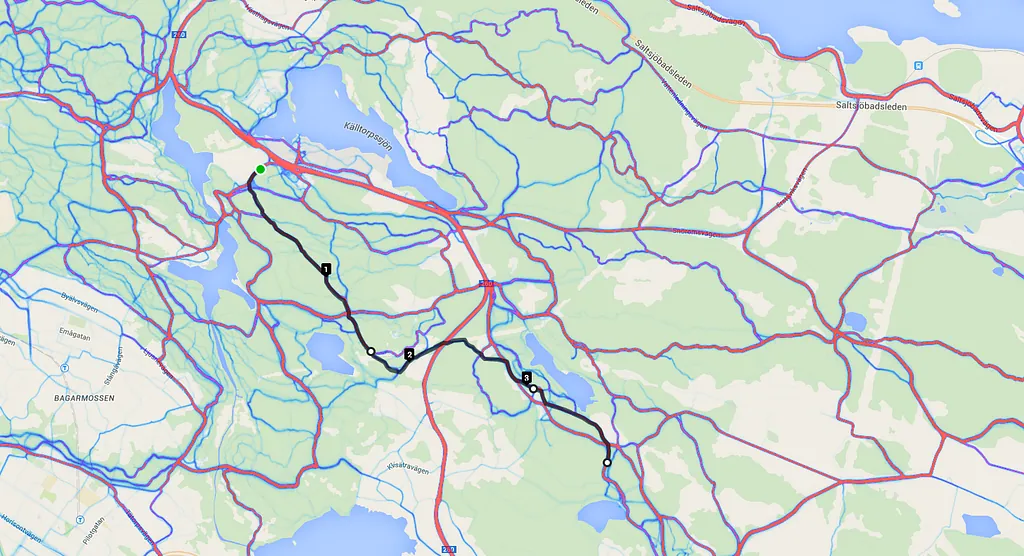
By switching on the “global heatmap” you can see which routes other cyclists and runners choose. This is particularly useful for MTB. Wide red lines in the middle of the forest indicate good single-track trails.
The route part of Strava is underrated and not really discovered. What needs fixing is the ability to discover routes better, and the bugs that make the browser freeze while you’re planning a route.
Strava hacks
Digital EPO
Give yourself a little boost by uploading your GPX or TCX files to Digitalepo.com before adding them to Strava. You can choose how many per cent faster you want to “juice your ride”. Or go all the way and steal all the KOMs and QOMs nearby. You deserve it!
Veloviewer
Veloviewer gives you pimped-up stats in a way Strava has chosen not to, since it has invested more in elegance and simplicity in the interface. You could say Veloviewer is the opposite. All the data you can possibly get out of Strava can be found here: 3D visualisation of routes, maximum speed per 100 metres, which rivals you have on certain segments, and a lame email signature for extra bragging opportunities.
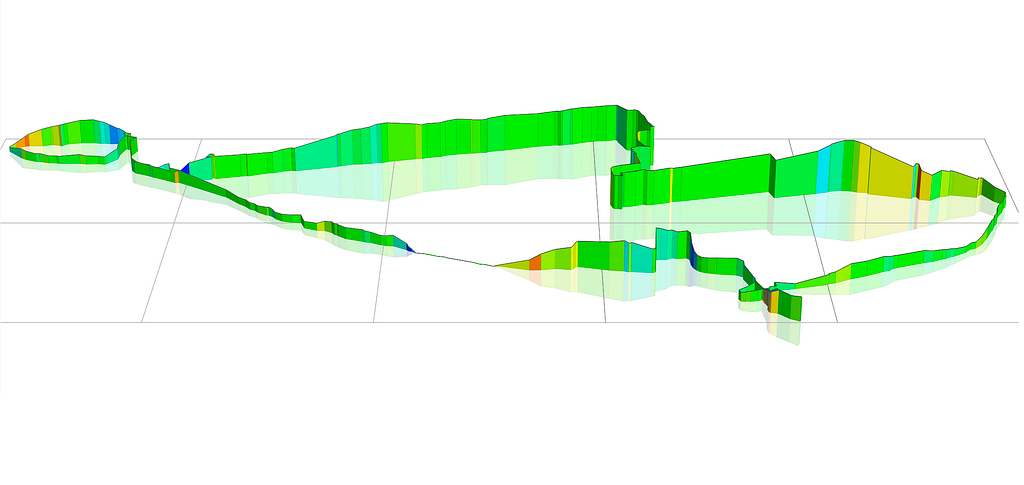
3D visualisation of a route around Södermalm in Stockholm
SNAP — Strava Needs A Polish
With SNAP you can adjust your plotted route if it has gone wrong because of a poor GPS signal. Above all useful when the GPS tracker has glitched and missed points along the way, so Strava cannot associate your activity with segments that matter to you. You enter the URL of your activity and can then adjust the GPS track to follow streets and cycle paths. Then you just save the file and upload it to Strava again. But don’t forget to delete the old activity.
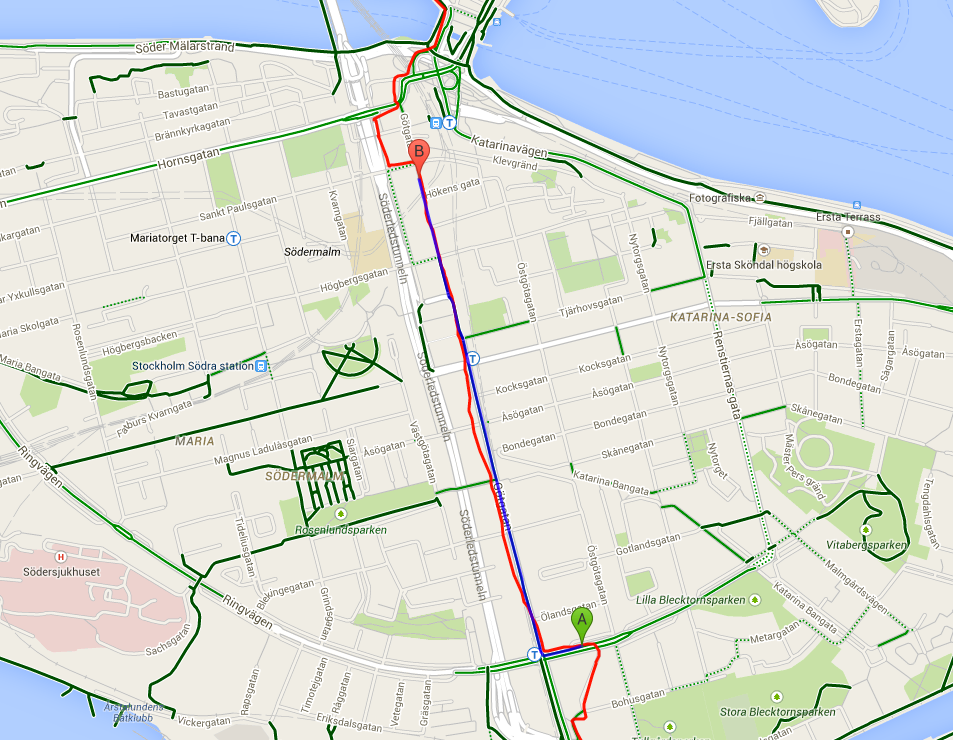
By dragging the blue line along the streets of your route, you can fix your GPS track
Criticism of Strava
Privacy
Strava is mainly designed for competitive cyclists and runners who want to compare themselves with others. But there are also users who are drawn to the simplicity and elegance of the design and who use Strava to log their training rather than for the social parts.
For these users, it is far too unclear at sign-up that data will be shared with other people. Say you install the app, don’t change any settings and then track your ride to work and call it “To work”. That’s quite a lot of information you’re sharing about where you live and where you work.
At the same time, it’s too hard to find how to switch to a higher privacy level in the settings. Above all, it’s odd that you can’t make these settings directly in the app. It should be said, though, that Strava has a pretty neat feature where you can add places — like home and work — that will be hidden from your uploads. You just have to find it.
Openness
Another criticism raised is that Strava is too poor at looking after the developer community that builds services on its API. Reasonably, all personal data that users upload (and choose to share with third-party apps) should be free and easily accessible, both to the person who uploaded it and to those who want to build services on it. Companies operating in this still fairly immature market should be transparent and open all the way. The market should decide who makes the best services, not who has locked in the most data and built the highest barriers to moving it.
Nowadays the API is open for “general availability”, but it was only after harsh criticism for hand-picking services to work with that they opened up again. It still applies that you may not “build something that increases competition” or “replicates Strava functionality”.
Antisocial behaviour
Strava’s game mechanics are accused of having fundamentally changed cycling etiquette. What used to be unwritten rules are set aside in the hunt for QOMs, KOMs and beating your own segment records.
Then I found Strava. Or maybe Strava found me. It was fate. My birth rite. My destiny. Now I am a king.
Regular training rides with friends and in cycling clubs now become a hunt to climb the leaderboards. As the virtual starting points of the most prestigious segments become more and more well known, it’s not unusual to see sudden pace increases without warning for the uninitiated.
Smart Strava cyclists deliberately sit at the back of the group when a new segment, preferably a climb, begins. Only to finish the segment at the front. This is called Strava sniping.
Like most other new innovations with game mechanics, Strava induces addiction. As someone wrote on a forum for mountain bikers:
“I used to ride around aimlessly thru the woods, with no purpose. No direction. Then I found Strava. Or maybe Strava found me. It was fate. My birth rite. My destiny. Now I am a king. I ride my wheeled throne through my kingdom. Sometimes I wave to the peasants as I pass.”
On the death of Kim Flint
Kim Flint was a 41-year-old engineer who died trying to reclaim his KOM on a segment on a steep descent outside the Berkeley Hills in California. He was riding faster than the speed limit, on the wrong side of the road, and crashed into an SUV.
Most agree that Flint had become addicted to Strava and the hunt to top the segment leaderboards. Two weeks before the tragic accident he tweeted: “49.3mph, on a bike. How I find religion on Sunday morning.” Converted, 49.3 mph equals 80 km/h.
Flint’s family sued Strava after his death, arguing that the company:
- Failed to warn users in KOM challenges where the roads are unsuitable for riding fast.
- Had not taken sufficient measures to ensure KOM challenges took place on safe roads, and
- Encouraged dangerous behaviour.
Flint’s parents said: “Our son would never have been riding fast downhill at South Park, or anywhere else, if he had never discovered Strava.”
Strava was never found liable — “cycling involves an assumed risk” — but has since tried to improve its communication about risks. You can now flag segments as “hazardous”, whereupon leaderboards are hidden by default for all users. Strava has also set up five community guidelines. Which were of course quickly parodied.
Read the whole story of Kim Flint on Bicycling.com. A long read, but highly recommended.
The future of Strava
It’s reasonable to assume that Strava’s growth levelled off during 2014. They themselves claim to have active athletes in 221 countries (there are only 206 countries), but they are fairly secretive about their figures. But we can make assumptions and do the maths.
If you look at the annual turnover of the bicycle market in the US ($6 billion) and assume that 20% of the market is aimed at serious cyclists, that gives us $1.2 billion. We can further assume that a serious cyclist spends $1,500 a year, which gives us just under a million serious cyclists. The US market is roughly the same size as Europe, so we can then double the number of cyclists.
If you look at Strava’s user IDs, it’s reasonable to believe that Strava has 3–4 million active users. Say 70% of these are cyclists and the rest are runners. That gives us 2–3 million cyclists. Then it becomes even more reasonable to believe that growth has slowed.
There have been rumours that they want to be acquired by Garmin or some other big hardware manufacturer, but they have denied this themselves in several interviews. Garmin is a much more engineering-driven company compared with Strava, which has its strong UX focus in its DNA. So it’s highly doubtful whether these cultures would work well together.
In 2012 Horvath said that a potential acquirer would have to “come from the media sector and already do business online, like Facebook or Google. […] It won’t be Garmin or any player from the cycling or running space”
In the same interview, Horvath said that “90% of revenue comes, and will come, from premium subscriptions.” We can do a bit of maths on that. Roughly three per cent of users are premium users today. If you estimate active users at 4 million, that means annual revenue of $7,200,000.
They have also started selling their big data to cities and states that want to use it to plan for accessibility. Oregon was first out this spring and is reportedly paying $20,000 a year to use the data.
Even though more cities have started buying this data, Strava presumably has a long way to go before it shows a profit, even though the goal has been to be profitable in the second quarter of 2015. In October they also raised $18.5 million in a fourth funding round “to grow internationally”.
The future and profitability of Strava are uncertain. But one thing is certain: it has shaken up the cycling industry.
This post was originally published on valtech.se on 12 January 2015.