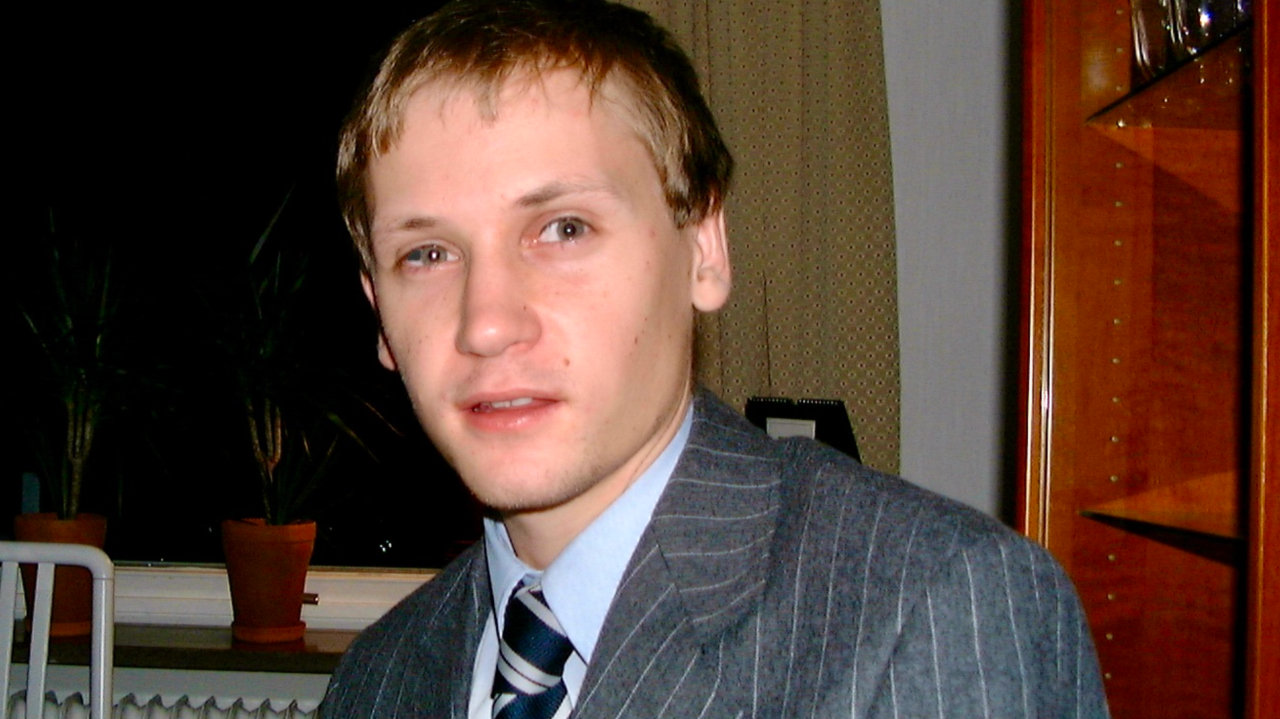
Here I am in 1999. In the middle of the much-sung-about IT bubble. Nobody remembers, but almost everything that was built was entirely idea- or concept-driven. There was money for most ideas. And – no joke – David Sundin was Sweden’s best pixel pusher in 1998 (his hip agency made a bid for a site I had hacked together).
Everything was new and I just went along with it.
Perhaps 80% of what was shipped became waste. Bad timing with the market. We solved few real problems. Interfaces were techno-optimistic disasters in a naive but irresistibly charming way. Wonky was putting it mildly.
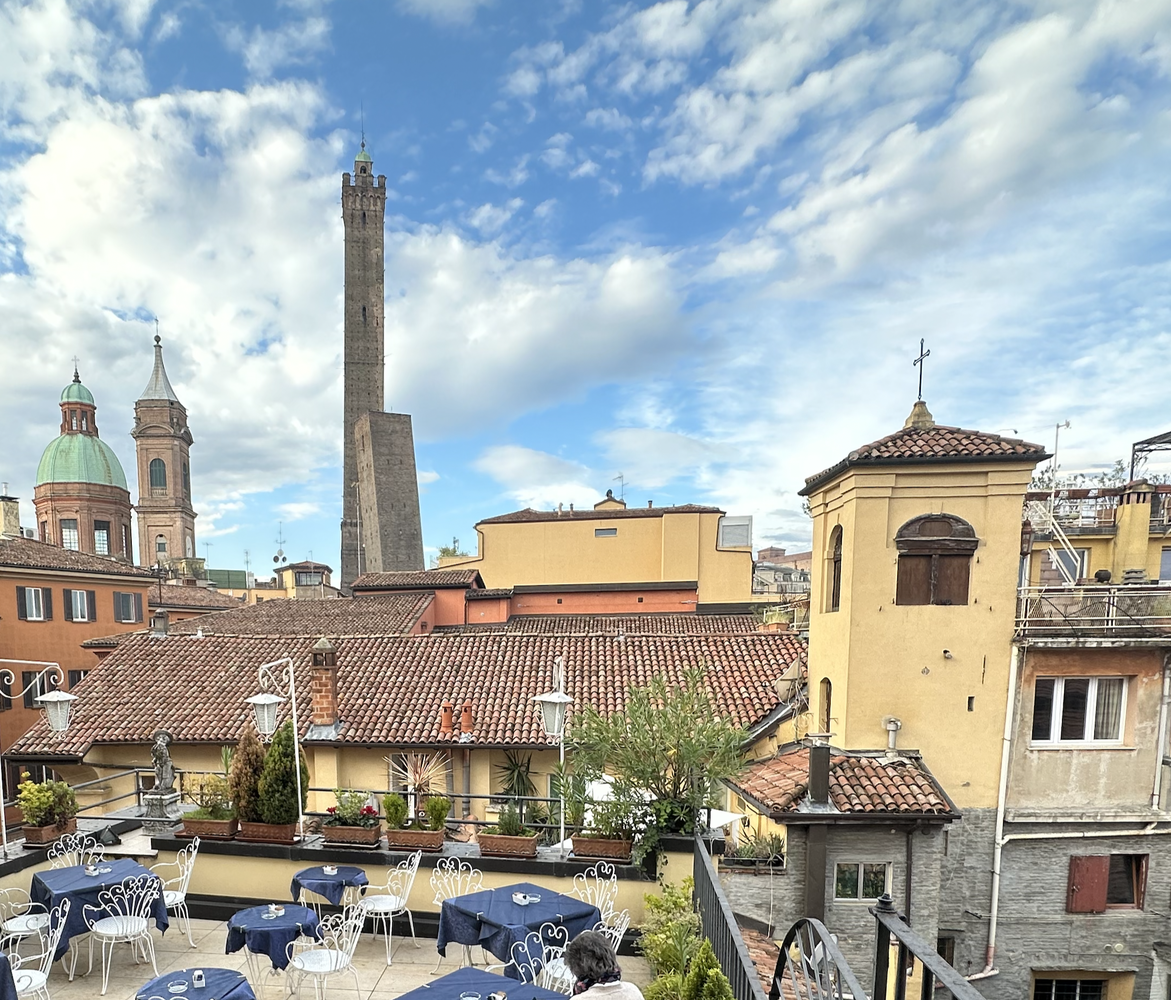
As crooked and wonky as the towers I can see from the terrace as I write this. After breakfast (cornetto albicocca, in case you were wondering).
* * *
Around 2003, user research and UX broke through in Sweden. Three years after the US, as usual. Jakob Nielsen. Jared Spool. Steve Krug. We went to NN/g Usability Week and felt like the best. Or rather, the first and furthest ahead.
We came back with one research and communication method after another. Shadowing. Personas. Conceptual information models, genuinely thought through a year before release. Focus groups with coffee and buns. Usability labs where we sat in the room next door and listened. And took notes. As if there were no tomorrow.
It got massively better.
And quite a lot of design by committee. Naive techno-optimism and the joy of discovery had to take a step back for naive methodological dogmatism. For better and worse. But better.
Now perhaps 60% became waste, not counting the staff-intensive methods.
Then it went on like this. And that was okay. Left-hand menus moved to the right. Content in focus. Content strategy. Jeff Gothelf. Right-hand navigation moved to the top. The top became a mega menu.
* * *
Mobile arrived. Accessibility became established. Social made its entrance. Mobile first. Luke Wroblewski. The top became a hamburger. Responsive design. Suddenly almost everything was stacked blocks without clear hierarchies.
We started going to SXSW in Austin so as not to be two years behind. Before the climate anxiety kicked in.
And there in Austin I took my first knockout punch in working life. Floored in some Ballroom X. Eric Ries ran through the philosophy behind Lean Startup in 45 minutes, and whatever was left of my product ego was gathered into a tiny, tiny pile that could be swept up onto a shovel.
Ash makes the best soil.
The knockout mostly consisted of that I’m-a-bloody-idiot-for-not-figuring-that-out-myself feeling. Or we had probably already understood. But not put it into words: whoever learns fastest wins.
Whoever learns fastest wins. All else being equal. Validated learning.
So learn fast. In a validated way.
That was Eric Ries’s product message at the front of that jet-lagged room with American wall-to-wall carpets.
(I still haven’t read the book.)
The feeling when you come home from a really good conference is no joke. Mountains can be moved. Books can be written. Musicals can be staged.
And dogmatic methods can be changed. Organisations can be reorganised. Stubborn sceptics can be converted. Immediately.
It lasts for a week. Maybe two, depending on how innocently gullible you are.
At the same time – this must have been 2013 – service design really started to become established in product development. A broader approach and in many cases even more qualitative research than before. Stakeholder orientation. More night than day, if you ask me.
In retrospect, it was a fairly polarising era in product and UX, not least in Sweden. Heated debates in Facebook forums and on Twitter. Coffee breaks and mudslinging in equal measure.
(Which among other things resulted in this prophecy)
But still. Damn, how we reached out with our tentacles. Looking for assignments. Looking for product organisations and leaders who wanted something other than settling for 50% waste. Who did not want to die the slow product death. In autonomous cosy teams.
So I ended up at SVT. That pretty much changed everything. A completely open sea.
There, in 2015, it was like joining a product company in California. Or, maybe not exactly like that. But there was an ingrained, progressive desire to experiment and test, like the new competitors on the other side of the Atlantic.
At SVT I finally got to run learning experiments on large user groups and do extensive growth and product analyses. Product development was suddenly up to date and modern. Growth teams were started and kept growing.
The experiment, product and user data was clear and lacked feelings. So we drifted over to content. And many have written and talked about that. Not least me.
Long story short: the AI analyses of programmes that we are doing now – exactly this week, before I woke up by the terrace with the crooked towers on this lovely Friday – are so crazy that a product or media analyst who had predicted them a year ago would have been sectioned with a double discharge review.
Bloody geniuses, that’s what we are. To put it mildly and in a balanced way. That is the exact feeling.
Finally there, someone would surely remark (but of course it’s the other way round).
* * *
So to the rest of you lunatics who keep driving product visions and method changes. Pushing for other ways of working. Stick to it. Don’t change the long-term idea. But question yourself – all the time. Refine the idea. And adapt to what is pragmatic enough to time technology leaps and demand. And learn when ash really is the best soil. But don’t let anything block the view.
There is a light that never goes out.
* * *
Five years ago I co-founded Signific. Yet another consulting outfit. Founded by two men. I know exactly what you’re thinking.
I walk in the same shoes as almost everyone else.
Experts in data and AI with a product approach. Or product with an AI and data approach. Same, same but different. And experimentation methods. Not just on product problems. But on societal problems and on a gigantic upcoming climate transition (yes, ignore the noise).
We did not have some super-revolutionary idea when we started. We never wanted to win any damn award at some corrupt, silly industry gala. But we wanted to make a serious mark on the consulting and product industry. Boost our clients’ competitiveness in a world where almost everything can be created, scraped, indexed and copied.
Let them become and remain the ones who are constantly copied and imitated. Who models are trained on. At the front of the queue.
But also – and this is just as important – we wanted to open up career paths. New roles for our unreasonably curious colleagues. Data analyst to AI/ML engineer. Product analyst to PM. Office manager to recruitment ace.
I mean paths into real roles with responsibility in our fine industry, not toothless paper lead roles.
We unlock energising springboard roles with unspoken demands for impact, responsibility and value. Through the people we attract. And how we are.
* * *
Now we are celebrating five years. And we are well on our way.
It still feels, it really does. It actually feels exactly like when we started: that not more damn people have grasped the immortal combination of product, data, AI and experimentation. That you even have to explain it. That’s how it feels. With heart, brain and everything.
But they are stronger than ever. Our clients. Our consultants.
And now we are the ones knocking people out in whatever ballroom you serve us. All of them. I honestly believe we will knock them all out.
💚 Siggan forever. Higher than the towers.
~ Bologna, September 2025